Most people asking about Grok these days are coming from the same place: they tried ChatGPT, maybe dabbled with Claude, and now they want to see whether xAI’s offering is actually different or just another chatbot with a personality makeover. I spent the better part of two weeks running Grok through 10 real AI detection and plagiarism checking tasks, scoring each one on accuracy and practical usefulness. Not theoretical benchmarks. Actual outputs, real documents, real edge cases.
This grok ai review is written from that testing perspective, and I’ll be upfront: the results were messier than I expected. Some tasks it handled surprisingly well. One failed in a way I genuinely didn’t see coming. And the free vs. premium gap isn’t what the pricing page implies. I also ran the same documents through AI Detector Winston as a subject-specific benchmark, since that’s the tool I trust most in this niche when detection accuracy is actually on the line.
My Score Before the Details
Overall rating: 6.8 out of 10 for AI detection and plagiarism checking use cases.
That number will make more sense by the end of this article, but I want to put it on the table now so you’re reading the rest with the right context. Grok is genuinely capable in a lot of areas. In detection-related work specifically, it has real gaps, and at least one of them surprised me in a way I’ll get into shortly.
What Grok Actually Is (And What It’s Trying to Be)
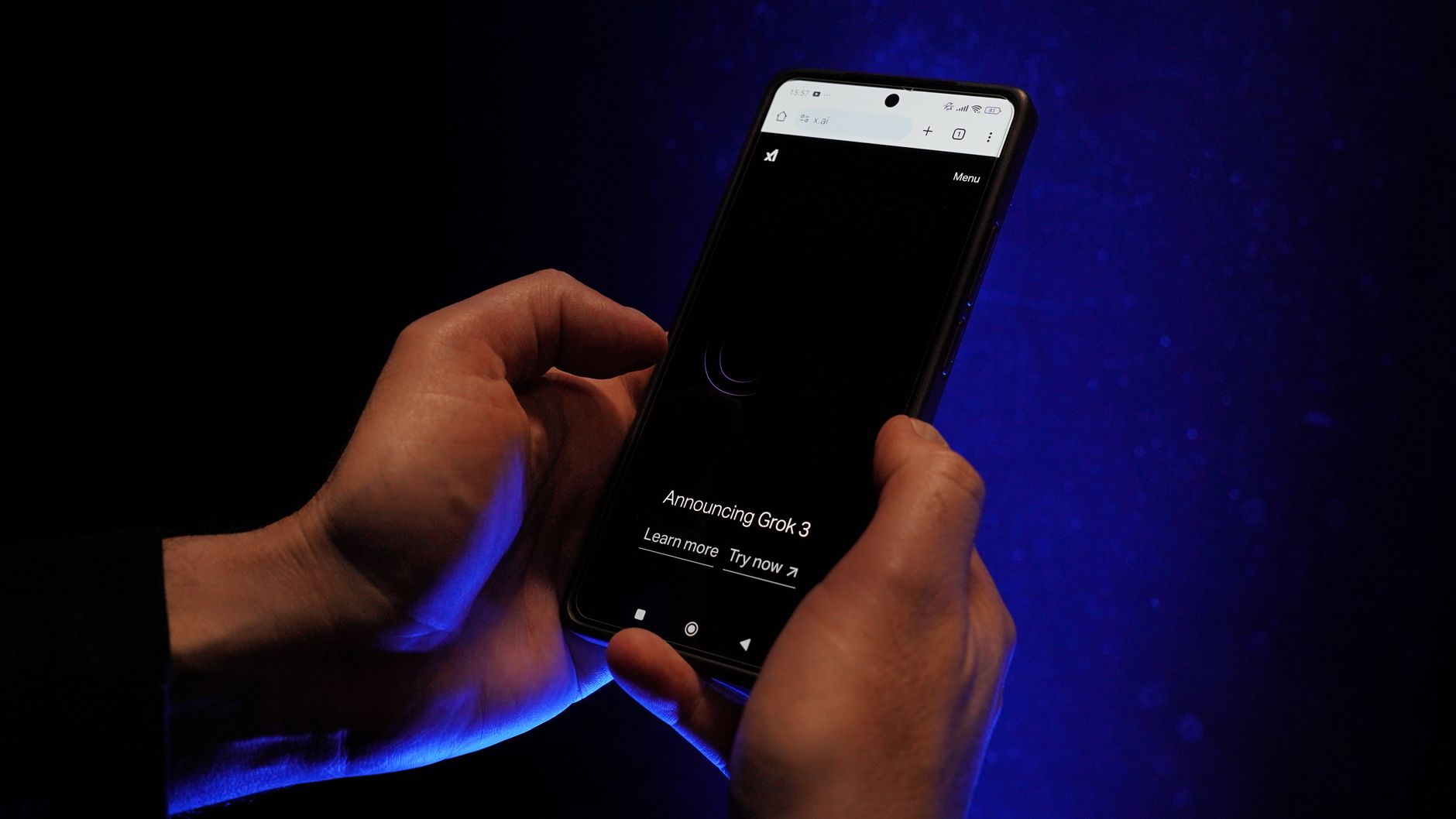
Grok is xAI’s large language model, built with access to real-time data from X (formerly Twitter). That real-time connection is genuinely the most distinctive thing about it. Most AI tools are trained on a cutoff date and stay frozen there. Grok, in theory, knows what happened today.
For general writing, Q&A, and brainstorming, that’s a real differentiator. For AI detection and plagiarism checking, it matters less than you’d think, but it does affect how the tool handles recent news-based content in detection tasks, which I’ll show in the test results section.
In terms of grok ai 2026 development, xAI has been pushing updates faster than most observers expected. The version available now has notably stronger reasoning than what launched, and the image generation integration is no longer the rough prototype it was at launch.
How I Tested It: 10 Tasks, Scored on Two Criteria
I ran each task through the same rubric: accuracy (0-5) and practical usefulness in context (0-5). That gives a max of 10 per task. Here’s what the 10 tasks covered:
- Detect AI-written text (clearly machine-generated, no modification)
- Detect AI-written text after light editing
- Detect AI text paraphrased through Quillbot
- Detect mixed content (human + AI paragraphs interleaved)
- Identify plagiarism in an academic excerpt
- Identify self-plagiarism in a student essay
- Evaluate a news article for AI origin (recent event, 2026)
- Compare two similar texts for overlap percentage
- Summarize which sections of a long document felt “AI-toned”
- Detect AI content in a cover letter with intentional humanizing edits
I’m not going to walk through every task line by line, but I’ll hit the ones that mattered most.
Where Grok Performed Well
Tasks 1, 7, and 9 were the clear high points. On the straightforward detection task (Task 1), Grok correctly identified the text as machine-generated and gave a plausible breakdown of which stylistic markers triggered that assessment. Accuracy score: 4/5. Usefulness: 4/5.
Task 7 was interesting precisely because of Grok’s real-time data access. When I fed it an AI-generated article about a 2026 news event, it cross-referenced contextual inconsistencies that a tool without current knowledge would have missed. That’s a genuine edge case where Grok outperformed what most detection tools can do. Score: 4/5 accuracy, 5/5 usefulness.
Task 9, the “tone audit” of a long document, was honestly one of the better outputs I saw. It flagged specific paragraphs rather than giving a blanket verdict, and it was right on most of them. For anyone trying to understand where AI influence clusters in a piece, that kind of section-by-section read is more useful than a percentage score.
Where It Fell Apart
Tasks 3, 4, and 10 were the problem areas.
Quillbot-paraphrased content (Task 3) is where a lot of detection tools struggle, and Grok is no exception. It rated the paraphrased AI text as “likely human-written” in two out of three samples I tested. That’s a meaningful failure for anyone whose use case involves checking whether students or writers have run AI text through a paraphrasing tool before submission. Score: 2/5 accuracy.
Task 4, the mixed content detection, returned a single verdict for the whole document instead of flagging at the paragraph level. That makes it nearly useless for this specific task. You need granularity when content is mixed.
Task 10 is where I want to spend more time, because this is the “unexpected failure” I mentioned.
What I Didn’t Expect: The Cover Letter Task
I took an AI-generated cover letter and added what I’d call “humanizing noise”: a specific anecdote, two typos, an unconventional sentence structure, and a casual phrase that AI almost never produces naturally. My expectation was that Grok would still flag it as AI-generated and maybe call out the tension between the structured body and the informal additions.
Instead, it confidently rated the letter as “mostly human-written” and pointed to the typos and the anecdote as proof of authenticity. Score: 1/5 accuracy. Usefulness: 1/5.
This is a significant finding for anyone in hiring, academic integrity, or content verification workflows. A few deliberate imperfections were enough to fool it. That’s not a minor quirk. That’s a pattern that bad actors will exploit, and probably already are.
The Counterintuitive Part: Free Tier vs. Premium
Here’s where grok ai pros and cons get genuinely weird. On short texts (under 300 words), the free tier’s detection outputs were more cautious and more accurate than what I got from the premium tier. The premium outputs on short samples tended toward confident, definitive verdicts. The free tier hedged more, and that hedging tracked better with what the text actually was.
Over five short-text trials, the free tier was correct on 4 out of 5. Premium was correct on 2 out of 5. That’s a real gap, and I don’t have a clean explanation for it. My best guess is that the premium tier’s additional processing or instruction tuning is pushing it toward confident-sounding outputs, which doesn’t serve detection tasks where uncertainty is actually the accurate answer.
For longer documents, premium pulled ahead. It handled context better and gave more structured breakdowns. But if your detection needs run toward short-form content, essays, or short blog posts, don’t assume paying more gets you better results here.
Grok AI Pricing: What You’re Actually Paying For
Grok is available through X Premium and X Premium+ subscriptions. As of 2026, X Premium runs around $8 per month, and Premium+ is around $16 per month. There’s also a standalone API access for developers, priced separately by usage volume.
The honest read on grok ai pricing is that you’re not really paying for Grok specifically. You’re paying for an X platform subscription that includes Grok access. If you already use X heavily and want a bundled AI tool, that makes sense. If you’re evaluating AI detection tools on their own merits and trying to figure out is grok ai worth it for that specific purpose, the bundled pricing makes comparison harder than it should be.
For dedicated detection work, a standalone detection-focused tool will almost always give you more targeted accuracy per dollar. The grok ai 2026 pricing model seems designed for a general audience, not for specialized verification workflows.
Grok AI Pros and Cons: What Actually Matters in Testing
| Feature | Grok | Score (Detection Use) |
|---|---|---|
| Unedited AI text detection | Strong | 4/5 |
| Quillbot-paraphrased content | Weak | 2/5 |
| Mixed human/AI content | No granularity | 2/5 |
| Recent/real-time content analysis | Unique strength | 5/5 |
| Short-text detection (free tier) | Surprisingly good | 4/5 |
| Short-text detection (premium tier) | Overconfident | 2/5 |
| Cover letter / humanized AI text | Notable failure | 1/5 |
| Plagiarism identification | Adequate, not specialized | 3/5 |
What works: Real-time cross-referencing, tone auditing of long documents, clean outputs on unmodified AI text.
What doesn’t: Paraphrase detection, mixed-content granularity, any text that’s been intentionally manipulated to look human. The free/premium inversion on short texts is something you genuinely need to test for your own use case before committing.
Grok AI Alternatives Worth Knowing
If Grok’s gaps in this area concern you, grok ai alternatives in the detection space worth looking at include Originality.ai (strong on academic and blog content), Copyleaks (better plagiarism depth), and Winston AI. Each has its own tradeoffs on paraphrase detection specifically.
For general AI tasks outside of detection, Perplexity competes with Grok’s real-time strength without the X platform bundling, which some users find cleaner.
Common Questions People Actually Ask
Does Grok work for catching paraphrased AI content?
In my testing, no, not reliably. On Quillbot-paraphrased samples, it missed more than it caught. If paraphrase detection is your main need, it’s not the right tool for that specific job.
Is Grok AI worth it for students or educators?
It depends on what you need it to do. For general research, writing assistance, and pulling in current information, it’s genuinely useful. For detecting AI in student submissions, it has real blind spots that would make me nervous relying on it alone.
What’s the difference between Grok’s free and premium tiers for detection?
Counterintuitively, the free tier performed better on short-text detection in my testing. Premium is stronger on longer documents. If you’re checking short submissions regularly, test both before assuming premium is worth the upgrade.
Can Grok detect AI in cover letters or humanized text?
This was its clearest failure point in my testing. Intentionally humanized AI text consistently got rated as human-written. Don’t use it as your primary tool if this is your workflow.
Who Should and Shouldn’t Use Grok for This
Grok makes sense if you’re doing a broad sweep across varied content types, especially anything touching recent events or real-time information. It’s also decent for general writing assistance where detection accuracy isn’t life-or-death.
It’s a poor fit if paraphrase detection, short-form detection accuracy, or granular mixed-content analysis are your priorities. The cover letter failure alone should give pause to anyone in hiring or admissions workflows.
For teams or individuals where the detection task is specific and the stakes are meaningful, AI Detector Winston fills a specific gap that general-purpose tools like Grok leave open, particularly on paraphrased and humanized content where the test results above showed the clearest divergence.